
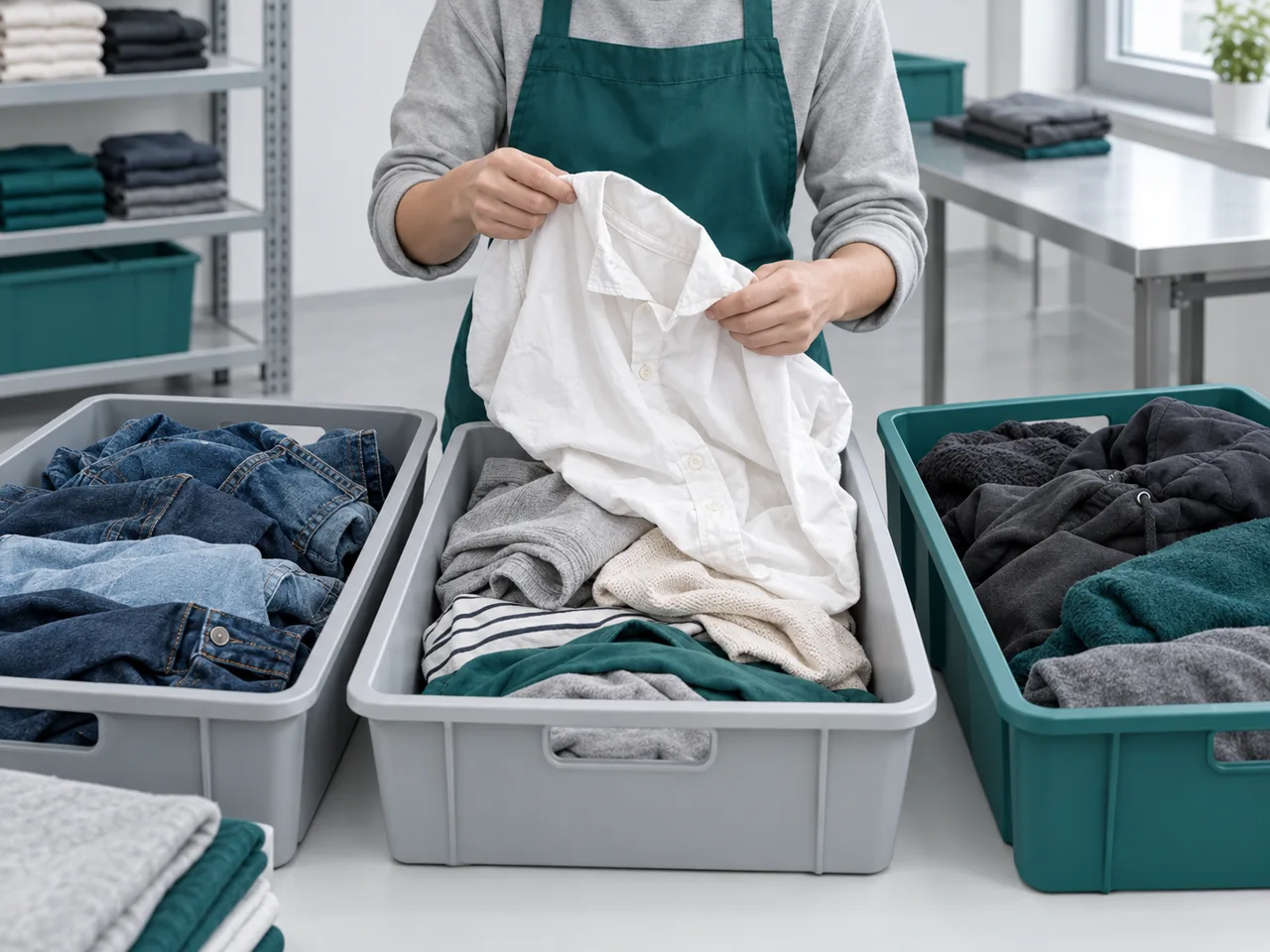
- Intake Supplier evidence, intake assessment and quantity received.
- Sorting and grading Category, class and safety decisions recorded for the material.
- Batch identity Identifier links quantities when batches are split or combined.
- Dispatch Accompanying documents show the transfer to a named recipient.
- Outcome evidence Reuse or recycling needs evidence from the downstream operation.
A dispatch record proves movement, not the final outcome.
Collectors, reuse operators and sorting facilities
Document intake decisions, responsibilities and onward routes. Sorting facilities additionally need controlled categories, grading, batch identification and evidence of the material leaving each process.
Traders, exporters and warehouses
Preserve links between supplier evidence, incoming batches and dispatch documents. Confirm which handling, storage and trading activities are included rather than assuming that one certificate covers every group company or site.
Retail, manufacturers and brand owners
Retail requirements focus on intake, sourcing records, product information and complaints. RTX-210 addresses manufacturers and brand owners commissioning the handling of products or surplus stock; dispatch evidence alone does not establish actual reuse.
Group certification
RTX-203-3 describes a central office, an internal control system and assessment of members. A group arrangement is not an exemption from controlling individual locations.
Two retail participation levels
Certification under the retail requirements and participation in the shop partner programme are distinct routes. RTX-603 describes the partner route; it must not be represented as equivalent to full certification. Draft thresholds remain subject to approval.
Questions to answer before choosing a route
The same organisation can need different controls in different places. Before discussing participation, prepare a short description of what actually happens on each site.
- Which activities take place at each location: collection, sorting, storage, trading, retail?
- Which product groups are handled, and is BRIC (non-textile) material involved?
- Are batches split, combined or relabelled, and how are quantities recorded?
- Which claims would you like to make, and to whom: business buyers or consumers?
What participation does not mean
Expressing interest, attending training or signing a preliminary agreement does not create a certificate or a right to use the mark. Any claim must follow the scope and status shown in the public register once the programme is operating.